










Can't Find Your Perfect Nude? Nude Color Nails Matched to Your Skin Tone
The perfect nude is not a shade — it is a coordinate: your undertone, your depth, and the rung between them. Here is the matching system, illustrated with twelve photographed sets from ivory to cocoa — including the rosy rung most guides forget.
In this guide
“Nude” is the only color you can buy wrong three times in a row
People do not fail at nude nails because they lack taste. They fail because the word “nude” pretends to be one color when it is really a ladder of dozens — and most shoppers pick by how pretty the shade looks in the bottle instead of how it sits against their own skin. The result is the familiar rotation of disappointments: too pink, too yellow, too chalky, too grey.
This guide replaces guessing with a two-step system. Step one reads your undertone — warm, cool or neutral — in under a minute. Step two reads your depth — where your skin sits from fair to deep. Together they point at one rung of the nude ladder, and the ladder below shows every rung photographed on real hands, each image linked to the exact set. For the wider world of shapes and finishes once your shade is found, the pillar guide takes over.
Why nude shopping goes wrong
Three specific mistakes cause almost every nude regret, and the system below fixes each one:
- Shopping by bottle color. Nude in the bottle is opaque and lit from outside; on the nail it is translucent and lit by your skin underneath. The same shade looks different on every person who wears it — your skin is an ingredient, not a background.
- Matching the palm instead of the fingertip. Palms are lighter and cooler than the backs of hands and nails. A nude matched to your palm will read grey against your actual skin.
- Ignoring finish. Gloss reflects your surroundings and reads warmer and deeper; matte absorbs light and reads lighter and flatter. Judging a shade without fixing the finish is judging it twice wrong.
Step 1 · Read your undertone
Undertone is the hidden hue under your skin — it never tans, never changes, and it decides which nudes look “right” without you knowing why. Two quick tests:
Vein test. In daylight, look at the veins on your inner wrist. Greenish → warm undertone. Bluish-purple → cool undertone. A genuine mix → neutral. Jewelry test. Hold gold and silver near your face: if gold makes your skin glow, read warm; if silver looks cleaner, read cool; if both work, read neutral.
Step 2 · Read your depth
Depth is simply how light or dark your skin is — independent of undertone. The practical rule: your ideal nude sits within one rung of your skin’s own depth. Two rungs lighter reads chalky and separate; two rungs darker reads muddy and heavy. Within that window you can steer the effect: one step lighter feels soft and romantic, an exact match elongates the finger, one step deeper adds definition and slimming contrast.
The shade ladder, rung by rung
Ivory & porcelain
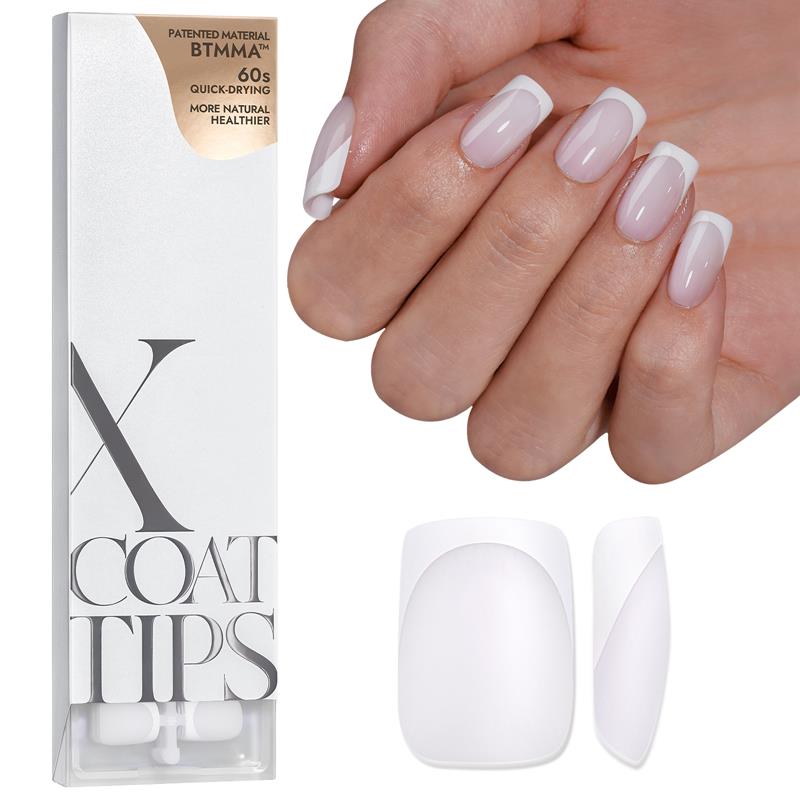
Rung 1 · the lightest steps — airy, bridal, cool-clean


Blush & rose
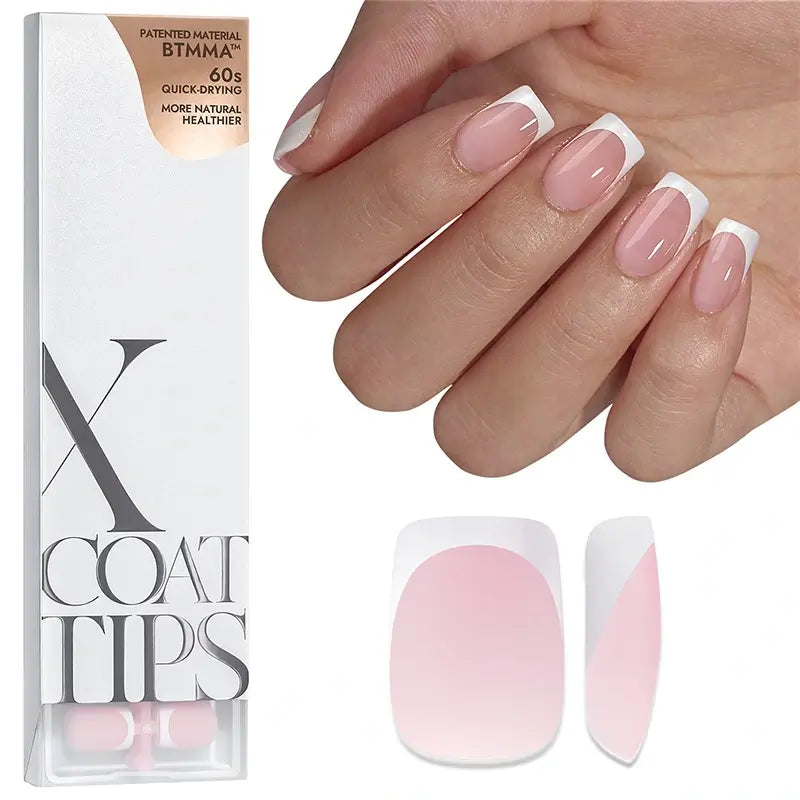
Rung 2 · the rosy side of nude — flush tones that read as health, not pink
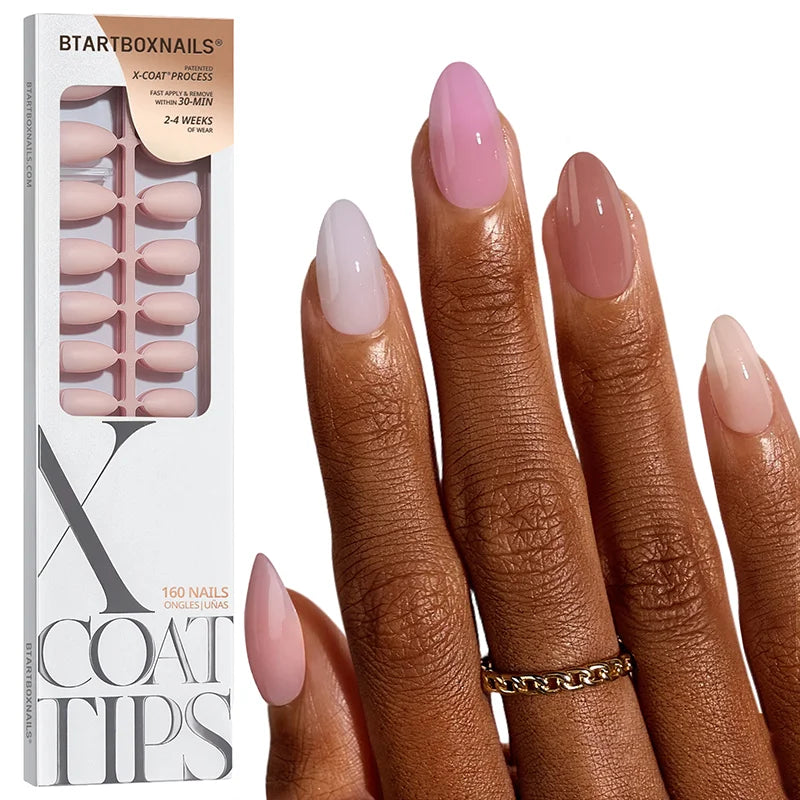
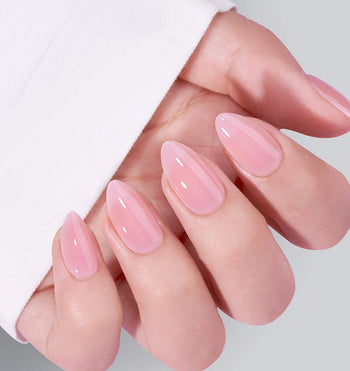
 Blush-rose on oval — the rosy rung between ivory and beige
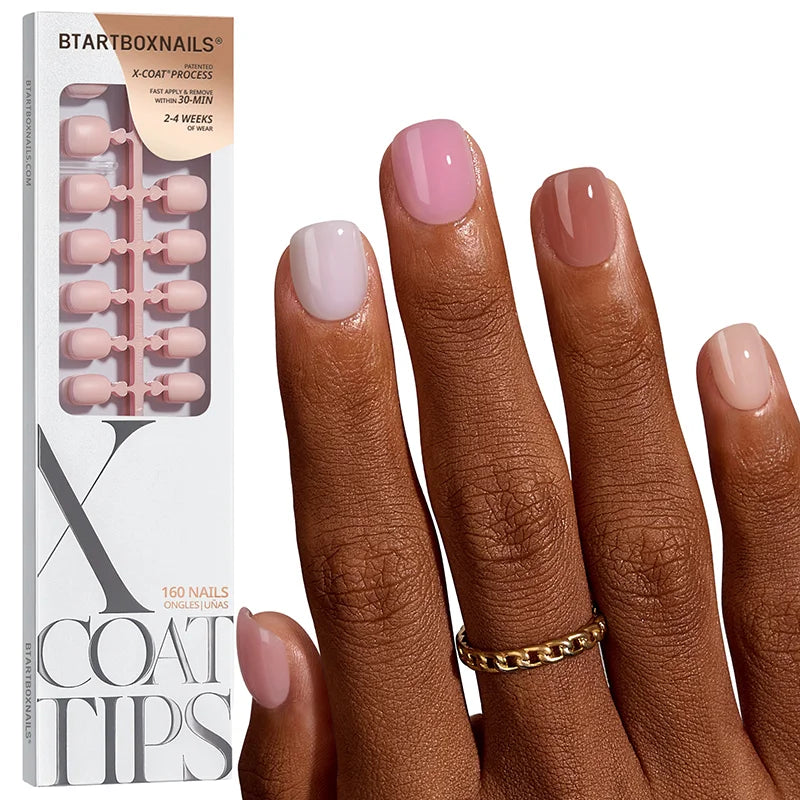
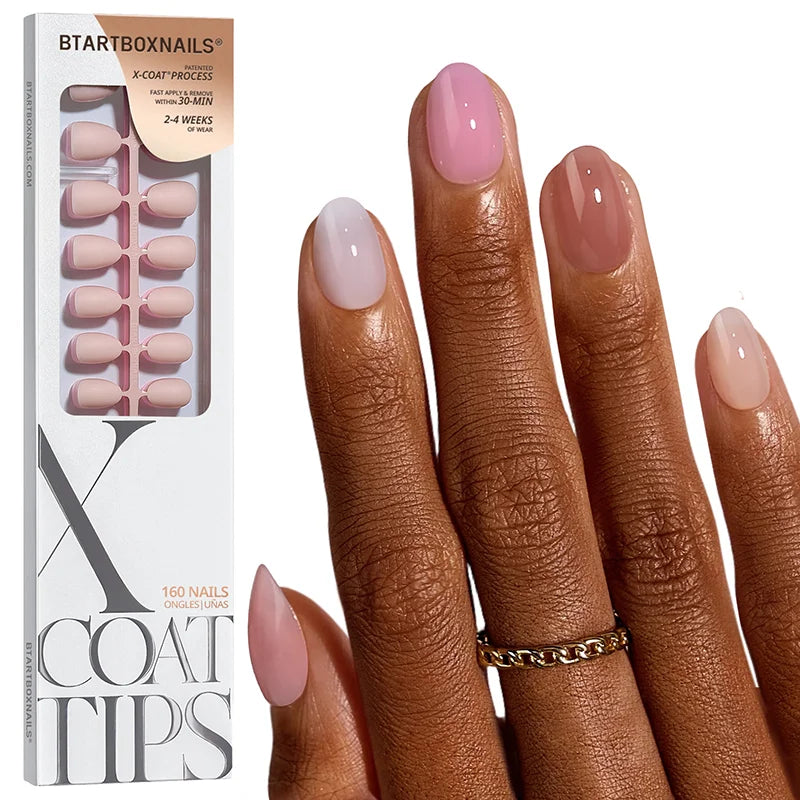
 A flush of sheer blush on short round — nearly your nails, with color
This is the rung cool undertones were promised in step one: milky pink and rosy beige that echo the flush under fair-to-medium skin. Warm undertones can wear it too — one shade this pretty forgives everything.
Beige & sand
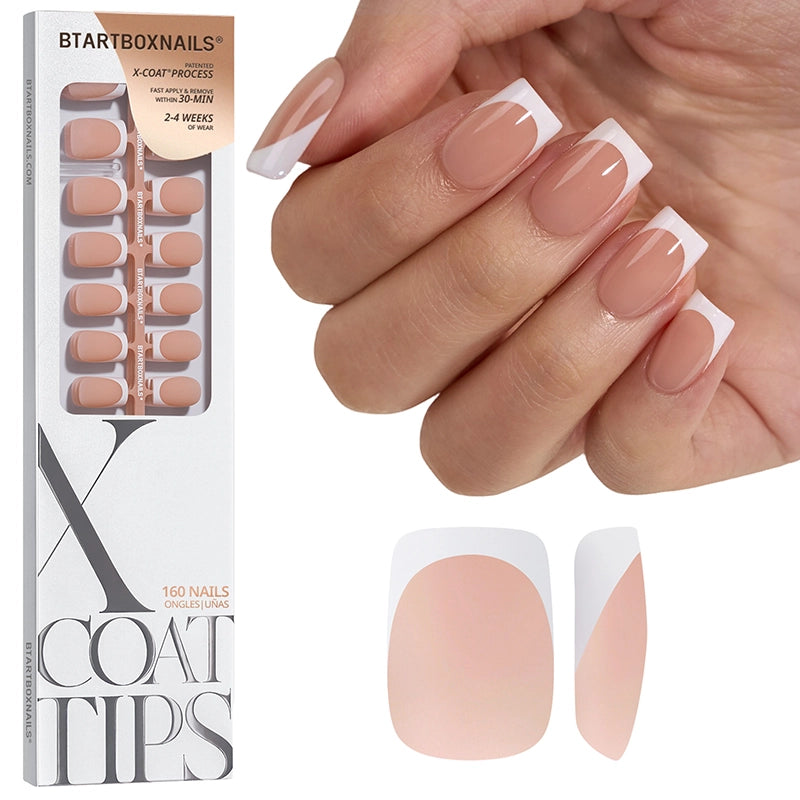
Rung 3 · the universal middle — warm beige and its cool counterpoint


Latte & caramel
Rung 4 · warmth enters — coffee tones from milky to honeyed


Mocha & coffee
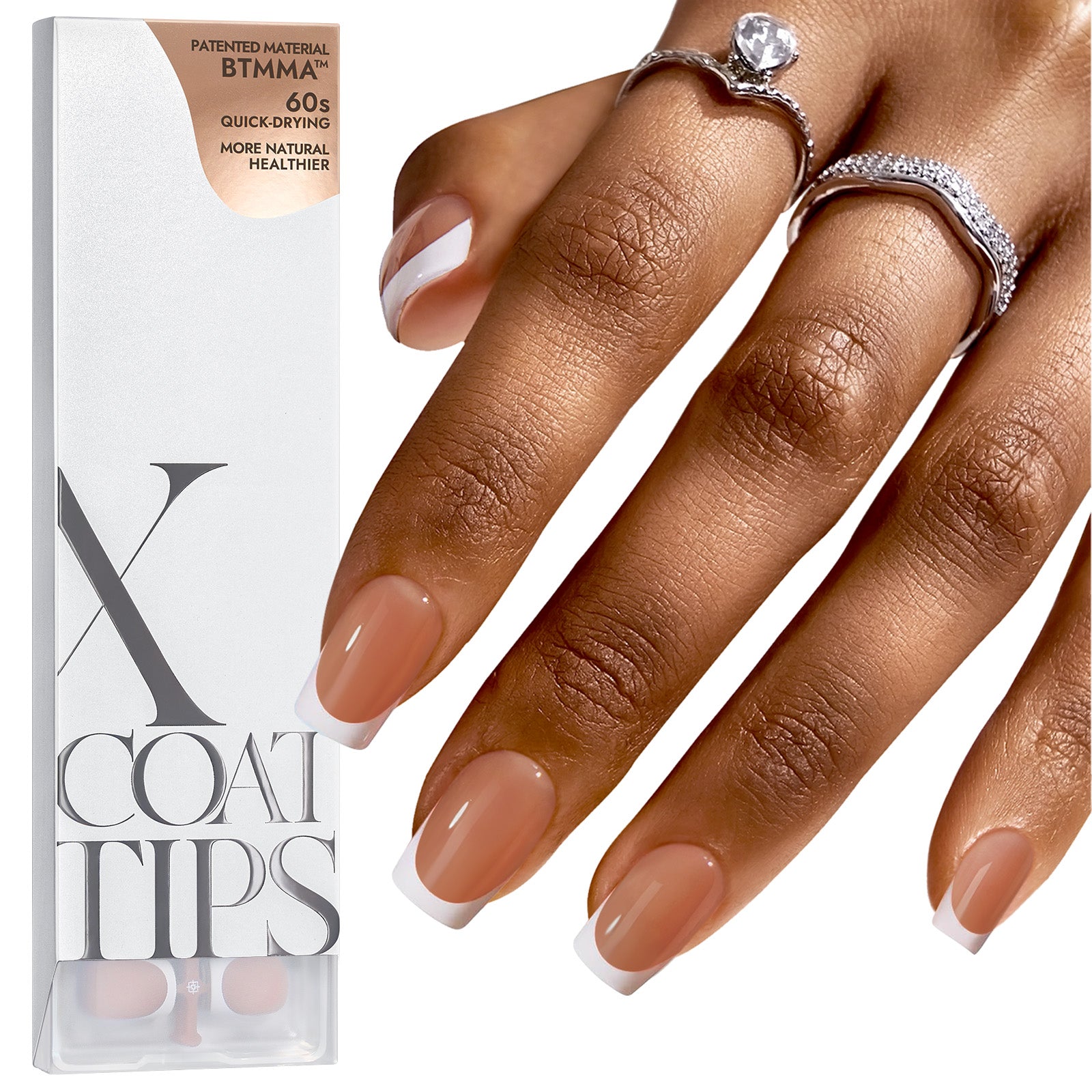
Rung 5 · definition for medium and deep skin


Cocoa & espresso
Rung 6 · the deep end — still glossy, still nude


Three matching rules that end the guessing
- The one-rung rule. Stay within one rung of your skin depth. This single constraint eliminates almost every chalky or muddy result people complain about.
- The daylight rule. Judge the set against the back of your hand, in natural light, with the finish you will actually wear. Bathroom lighting lies; ten seconds by a window does not.
- The jewelry rule. If the shade is meant to live next to your everyday jewelry, test them together. Gold flatters the warm rungs (3–5); silver and pearl flatter cool ivories and rosy beiges.
When you sit between two rungs, choose the deeper one. It photographs better, grows out more gracefully, and reads richer in every season’s light. The lighter rung is only worth it when you are deliberately chasing the soft, romantic effect.
FAQ
How do I know my undertone for nude nails?
What nude color suits medium / tan skin best?
What nude color suits deep skin best?
Should my nude nails match my skin exactly?
Why does the same nude look different on everyone?
Do nude color rules change with the seasons?
Your coordinate, your set
Undertone picks the family, depth picks the rung, daylight signs it off — that is the entire system. Find your rung on the ladder above, tap through to the photographed set, and nude stops being a gamble: