








Qu'est-ce que les cuticules, et pourquoi font-elles ou défont-elles votre manucure parfaite ? Ces fines bandes de peau autour de vos ongles peuvent sembler insignifiantes, mais elles sont en réalité le secret pour obtenir des résultats dignes d'un salon, que vous portiez des faux ongles ou vos ongles naturels.
Que vous soyez un(e) passionné(e) de nail art ou que vous souhaitiez simplement des ongles sains et beaux, comprendre vos cuticules change tout. Ils sont le système de protection intégré de vos ongles, empêchant les infections et soutenant une croissance forte qui crée la base parfaite pour n'importe quel style d'ongle.
Prêt à maîtriser le soin des cuticules ? Nous allons tout vous expliquer pour transformer votre routine ongulaire et obtenir le look impeccable dont vous rêvez.
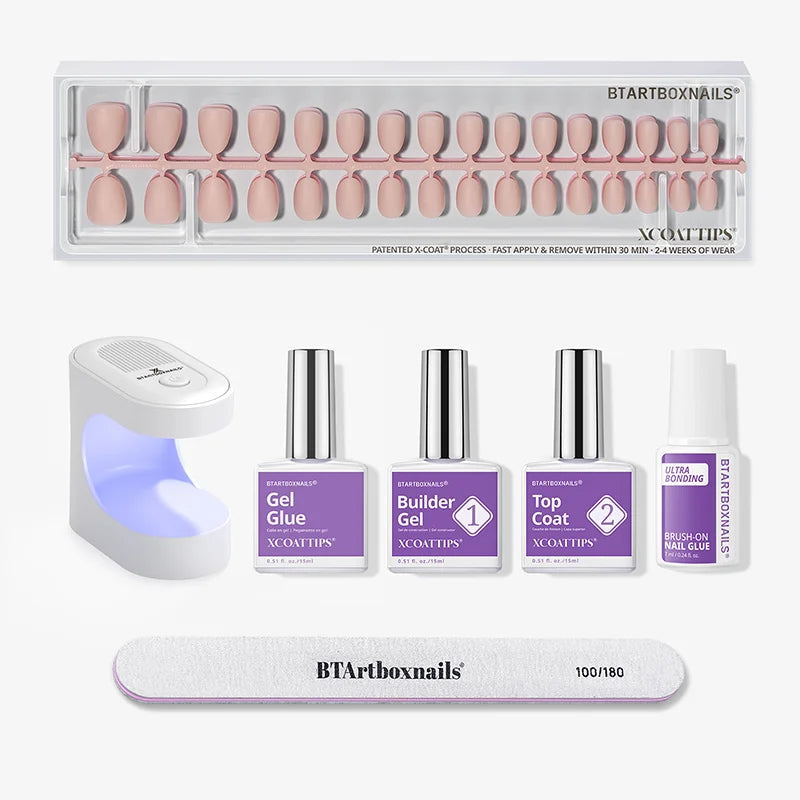
Prêt à obtenir des ongles parfaits comme au salon chez vous ? Nos kits complets pour ongles incluent tout ce dont vous avez besoin pour des résultats professionnels, y compris des outils de soin des cuticules pour une préparation saine des ongles.
Qu'est-ce que les cuticules ? Comprendre l'anatomie de vos ongles

Les cuticules sont de fines couches de peau à la base de vos ongles. Elles forment une barrière contre les bactéries et les infections.
Il y a un mélange de tissus vivants et morts ici, et les deux travaillent ensemble pour protéger votre matrice de l'ongle tout en soutenant une croissance saine de l'ongle.
La science derrière les cuticules : structure et fonction
Vos cuticules ont deux parties principales :
- Le repli unguéal proximal est la peau vivante qui recouvre la base de votre plaque d'ongle.
- Le éponychium est la fine couche de peau morte qui s'étend sur la surface de votre ongle.
Le cuticule agit comme un joint entre votre ongle et la peau environnante. Cette barrière empêche les bactéries, champignons et autres germes nuisibles de pénétrer.
Vos cuticules sont composés de kératine, la même protéine que vos ongles et vos cheveux. Ce matériau résistant aide à créer une couche protectrice solide qui résiste à l'usure quotidienne.
La zone du cuticule contient de petits vaisseaux sanguins et des terminaisons nerveuses. Ceux-ci nourrissent la matrice de l'ongle, qui se trouve sous votre cuticule et forme de nouvelles cellules d'ongle.
Où se trouvent les cuticules sur vos ongles
Vous trouverez vos cuticules à la base de chaque ongle de la main et du pied. Ils forment un en forme de C frontière où votre ongle rencontre votre peau.
Le cuticule recouvre la matrice de l'ongle, qui se cache sous la peau à la base de l'ongle. Cet endroit caché produit les cellules qui deviennent votre plaque d'ongle visible.
Votre cuticule s'étend légèrement sur la surface de l'ongle sous forme d'un film fin et transparent. Parfois, il ressemble à de petits morceaux de peau que vous avez envie d'enlever.
La zone du cuticule comprend le rainure de l'ongle, le petit espace en creux d'où votre ongle pousse sous la peau. Cette rainure aide à guider la croissance correcte de l'ongle.
Comment les cuticules protègent la santé de vos ongles
Les cuticules servent de première ligne de défense de votre ongle contre les infections. Elles bloquent les bactéries, levures et champignons d'atteindre la matrice sensible sous votre peau.
Lorsque vous endommagez ou retirez vos cuticules, votre risque d'infections des ongles augmente considérablement. Paronychie est une infection courante qui s'infiltre par le tissu de la cuticule endommagé.
Les cuticules saines aident à maintenir des schémas de croissance des ongles appropriés. Elles protègent la matrice de l'ongle pour qu'elle puisse produire des ongles forts et lisses sans interférence extérieure.
Vos cuticules aident aussi à maintenir l'équilibre hydrique autour de vos ongles. Elles retiennent l'eau et bloquent les substances nocives d'entrer dans la zone de l'ongle.
Des cuticules intactes réduisent vos risques de développer peaux mortes accrochées, qui sont ces petites déchirures dans la peau autour de vos ongles qui peuvent devenir douloureuses et infectées.
Pourquoi le soin des cuticules est important pour des ongles sains

Un soin approprié des cuticules affecte directement la solidité, l'apparence et la croissance des ongles. Les cuticules négligées attirent bactéries et infections, tandis que les cuticules saines protègent la base de l'ongle et aident vos ongles à pousser régulièrement.
Signes de cuticules saines vs malsaines
Cuticules saines semblent lisses et reposent à plat contre la base de l'ongle. Elles sont douces et flexibles, pas rugueuses ni sèches.
La peau semble hydratée, sans fissures ni déchirures. Les cuticules saines ont un aspect légèrement translucide et ne se détachent pas de l'ongle ni ne laissent d'espaces où la saleté pourrait s'infiltrer.
Cuticules malsaines montrent des signes d'alerte :
- Peau sèche et fissurée se détachant de l'ongle
- Tissu dur et épais qui semblent rugueuses ou bosselées
- Zones rouges et enflées autour de la base de l'ongle
- Peaux mortes douloureuses ou peau déchirée
- Zones blanches et squameuses qui semblent s'écailler tout le temps
Ces problèmes donnent un aspect négligé à vos ongles et ouvrent la porte aux germes pouvant causer des infections.
Problèmes courants des cuticules et leurs causes
Cuticules sèches apparaissent lorsque vous négligez l'hydratation. Le temps froid, les lavages fréquents des mains et les produits chimiques agressifs éliminent les huiles naturelles.
Peaux mortes accrochées apparaissent lorsque les cuticules sèches se fissurent et se déchirent. Si vous mordez ou grattez vos cuticules, ou utilisez des outils pour ongles sans précaution, vous aggraverez la situation.
Infections des cuticules se produisent lorsque des bactéries pénètrent par des coupures ou une peau endommagée. Recherchez des rougeurs, un gonflement, du pus ou une douleur lancinante autour de l'ongle.
Cuticules trop longues se développent lorsque la peau morte s'accumule sur la plaque de l'ongle. Ne pas repousser régulièrement et doucement les cuticules permet que cela se produise.
Dommages chimiques provient des produits pour ongles, des produits de nettoyage ou des dissolvants à base d'acétone. Ceux-ci assèchent et affaiblissent le tissu de vos cuticules avec le temps.
Comment les cuticules négligées affectent la croissance des ongles
Les cuticules endommagées ralentissent la croissance des ongles en perturbant la matrice de l'ongle en dessous. Cette zone a besoin de protection pendant qu'elle forme de nouvelles cellules de l'ongle.
Lorsque les cuticules se fissurent ou s'écaillent, elles ne peuvent plus sceller la base de l'ongle. Les bactéries et la saleté s'y coincent, provoquant une inflammation qui perturbe la croissance normale.
Une mauvaise santé des cuticules entraîne :
- Croissance plus lente des ongles
- Ongles faibles et cassants qui se cassent facilement
- Surfaces d'ongles irrégulières avec des stries
- Risque accru d'infections des ongles
Vos cuticules agissent comme un sceau autour de chaque racine d'ongle. Sans elles, vos ongles deviennent vulnérables et poussent plus lentement qu'ils ne le devraient.
Vous voulez renforcer vos ongles naturels tout en maintenant un soin sain des cuticules ? Découvrez notre gels constructeurs transparents pour des ongles naturels et durables qui commencent par une bonne préparation du lit de l'ongle.
Conseils essentiels pour le soin des cuticules pour de beaux ongles

Un bon soin des cuticules repose sur une routine quotidienne, les bons produits et savoir quand demander de l'aide professionnelle plutôt que de gérer soi-même.
Routine quotidienne d'entretien des cuticules
Commencez votre journée en lavant vos mains avec un savon doux. Évitez les nettoyants agressifs qui éliminent les huiles naturelles de votre peau.
Appliquez de l'huile pour cuticules chaque matin et soir. Massez l'huile à la base de chaque ongle, là où la cuticule rencontre la plaque de l'ongle.
Étapes de soin du matin :
- Lavez bien vos mains
- Appliquez une fine couche d'huile pour cuticules
- Massez doucement pendant environ 30 secondes par ongle
- Repoussez les cuticules ramollies avec votre doigt
Étapes de soin du soir :
- Enlevez tout résidu de vernis à ongles
- Faites tremper les bouts des doigts dans de l'eau tiède pendant cinq minutes
- Appliquez une crème ou une huile pour cuticules
- Portez des gants en coton pour dormir pour une hydratation supplémentaire
Ne coupez jamais vos cuticules complètement. Ne taillez que de petits morceaux de peau morte ou les peaux accrochées, et utilisez des pinces à cuticules propres.
Repoussez doucement les cuticules lorsqu'elles sont molles et humides. Utilisez un bâtonnet en bois d'orange ou un pousse-cuticules en caoutchouc pour éviter les dommages.
Meilleurs produits pour la santé des cuticules
Recherchez des huiles pour cuticules contenant de la vitamine E, de l'huile de jojoba ou de l'huile d'amande douce. Elles pénètrent profondément et gardent vos cuticules hydratées.
Principaux ingrédients des huiles pour cuticules :
- Huile de jojoba – s'absorbe rapidement, non grasse
- Vitamine E – aide à protéger contre les dommages
- Huile d'argan – riche en acides gras
- Huile d'arbre à thé – antibactérien naturel
Choisissez des crèmes pour cuticules avec du beurre de karité ou de la lanoline pour une couverture plus épaisse et protectrice. La nuit est le meilleur moment pour les utiliser pour un traitement en profondeur.
Évitez les produits contenant de l'alcool, de l'acétone ou des parfums forts. Ils assèchent vos cuticules et peuvent provoquer des irritations.
Outils essentiels :
- Lime à ongles en verre ou en cristal
- Pousse-cuticules en caoutchouc
- Pince à cuticules tranchante
- Brosse à ongles douce
Nettoyez vos outils après chaque utilisation et remplacez-les régulièrement pour éviter les bactéries.
Soins professionnels vs. soins des cuticules à domicile
Les manucures professionnelles offrent une coupe experte des cuticules et des traitements que vous ne pouvez pas faire en toute sécurité à la maison. Les techniciennes en onglerie ont la formation pour enlever l'excès de cuticule sans vous blesser.
Si vous avez des problèmes de cuticules ou souhaitez que vos ongles soient parfaits, essayez de consulter un professionnel toutes les deux ou trois semaines. Ils peuvent aider avec les ongles incarnés, les infections ou la sécheresse tenace.
Quand choisir un soin professionnel :
- Cuticules épaisses et trop développées
- Signes d'infection ou d'inflammation
- Peaux mortes douloureuses ou déchirures
- Événements spéciaux où vos ongles doivent être impeccables
Les soins à domicile conviennent pour l'entretien quotidien et la santé basique des cuticules. Vous pouvez repousser les cuticules en toute sécurité, appliquer des huiles et couper les petites peaux mortes vous-même.
Pratiques sûres à domicile :
- Faites tremper avant tout travail sur les cuticules
- Utilisez uniquement des outils désinfectés
- Ne forcez jamais et ne coupez pas agressivement
- Arrêtez si vous ressentez de la douleur ou voyez du sang
Honnêtement, combiner les deux approches est le mieux. Continuez les soins quotidiens à la maison et prenez rendez-vous pour un soin professionnel de temps en temps pour un nettoyage en profondeur et une coupe experte.
Transformez vos ongles bien entretenus en œuvres d'art époustouflantes ! Découvrez nos kits de nail art et créez de magnifiques designs sur la toile parfaite que vous avez préparée grâce à un soin approprié des cuticules.
Conclusion : Qu'est-ce que les cuticules ?
Vous savez maintenant exactement ce que sont les cuticules et pourquoi elles sont essentielles pour la santé des ongles. Ces barrières protectrices méritent des soins doux, pas une coupe ou un retrait agressif qui peut causer infections et dommages.
Un soin approprié des cuticules crée la base parfaite pour n'importe quel style d'ongles, que vous optiez pour un look naturel ou que vous appliquiez vos faux ongles préférés. N'oubliez pas de repousser doucement les cuticules ramollies et de les hydrater pour de meilleurs résultats.
Prêt à améliorer la santé de vos ongles ? Découvrez quelles vitamines sont bonnes pour les ongles et découvrez comment la nutrition joue un rôle crucial pour avoir des ongles forts et beaux.
Questions fréquentes : Qu'est-ce que les cuticules ?
Faut-il enlever ses cuticules ?
Vous ne devez pas couper ou enlever complètement vos cuticules. Elles agissent comme une barrière protectrice qui empêche les bactéries et germes d'entrer dans le lit de l'ongle. Au lieu de couper, repoussez doucement les cuticules ramollies après une douche ou un bain.
Quel est le rôle des cuticules ?
Les cuticules servent de première défense de votre ongle contre les infections en scellant l'espace entre la plaque de l'ongle et la peau. Cette barrière empêche la saleté, les bactéries et autres substances nocives d'endommager vos ongles. Elles aident aussi à maintenir l'humidité autour du lit de l'ongle pour une croissance saine.
Faut-il repousser ses cuticules ?
Vous pouvez repousser vos cuticules en toute sécurité lorsqu'elles sont molles, de préférence après une douche ou un bain chaud. Utilisez un repousse-cuticules ou un bâtonnet en bois d'orange avec une pression douce pour éviter de déchirer la peau. Repoussez les cuticules une fois par semaine seulement lors des soins réguliers des ongles pour éviter les irritations.
Pourquoi les gens coupent-ils les cuticules ?
Les gens coupent les cuticules parce qu'ils veulent que leurs ongles paraissent plus propres et soignés. Une croissance visible des cuticules peut donner une impression de manucure négligée ou inachevée. Beaucoup ne réalisent pas que couper les cuticules peut entraîner des infections et suivent des conseils de beauté dépassés.